
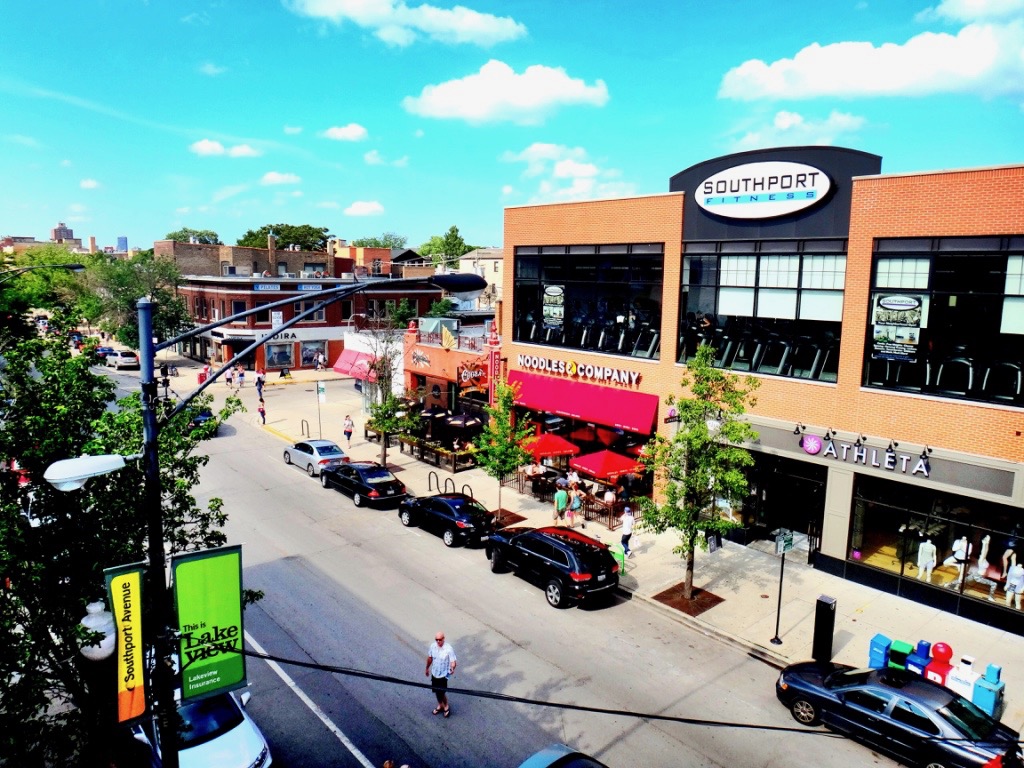
From independent boutiques and neighborhood institutions to national retail brands, Chicago’s Southport Corridor has changed dramatically over the past 20 years. Has that success come at the expense of the small businesses that made the neighborhood special?
Southport Avenue today looks different from the shopping street Chicagoans knew in 2006, 2011 or even 2016. Independent boutiques, neighborhood restaurants, bars and service businesses now share the avenue with major apparel, beauty and lifestyle brands. The most dramatic changes have occurred along the prime shopping blocks between Roscoe Street and Addison Street.
The central question is not whether national brands belong on Southport. It is whether independent businesses can continue to find room alongside them.
Twenty years of change
2006: The Anthropologie era begins
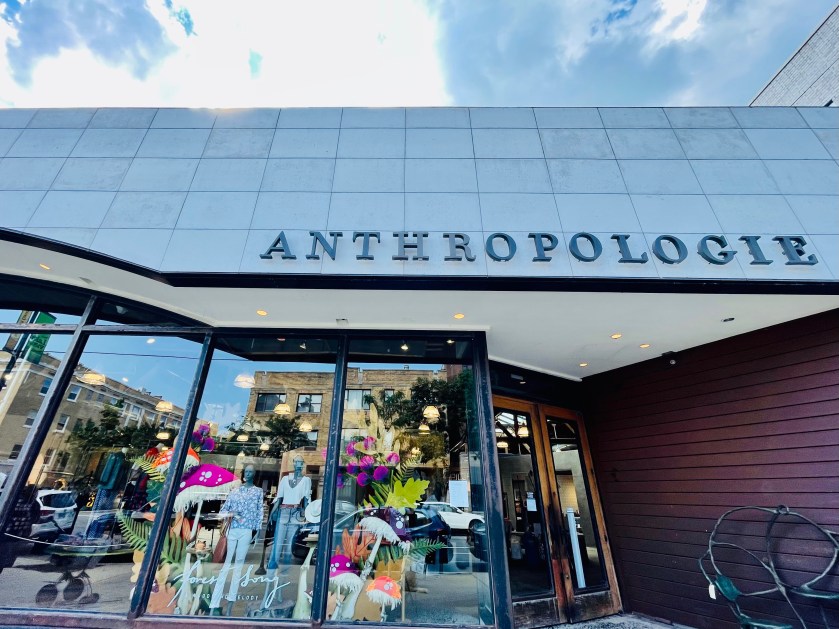
Anthropologie’s arrival at 3532 N. Southport helped establish the avenue as a destination for shoppers from beyond Lakeview. It was an early sign that national fashion retailers saw the potential of Southport’s surrounding neighborhoods and walkable shopping environment.
2011 – 2016: National retail accelerates
As brands such as J.Crew, Gap, Free People, Athleta and lululemon entered the district, Southport’s reputation changed. The growing concentration of recognizable retailers attracted more shopping trips and increased competition for prominent storefronts.
In a 2016 DNAinfo report, commercial rents on properties handled by one brokerage were reported to have increased from an average of $27 per square foot in 2003 – 2005 to $41 in 2013 – 2015. Those figures illustrate the pressures independent businesses could face as demand grew.
2021 – 2026: Premium lifestyle retail becomes established
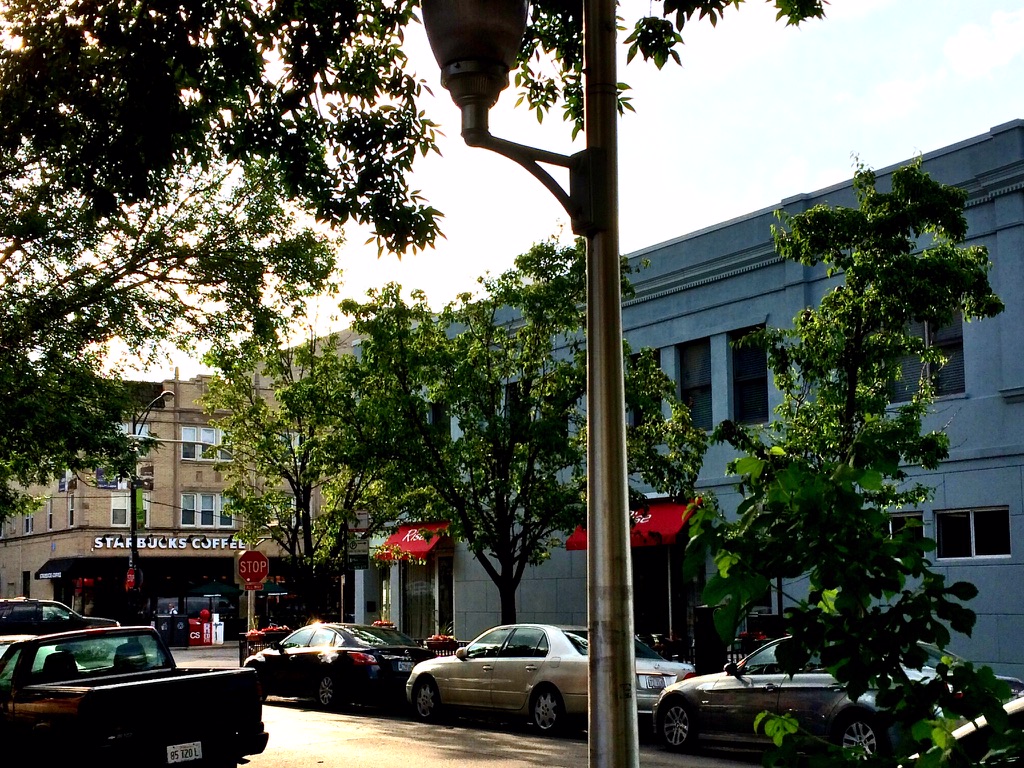
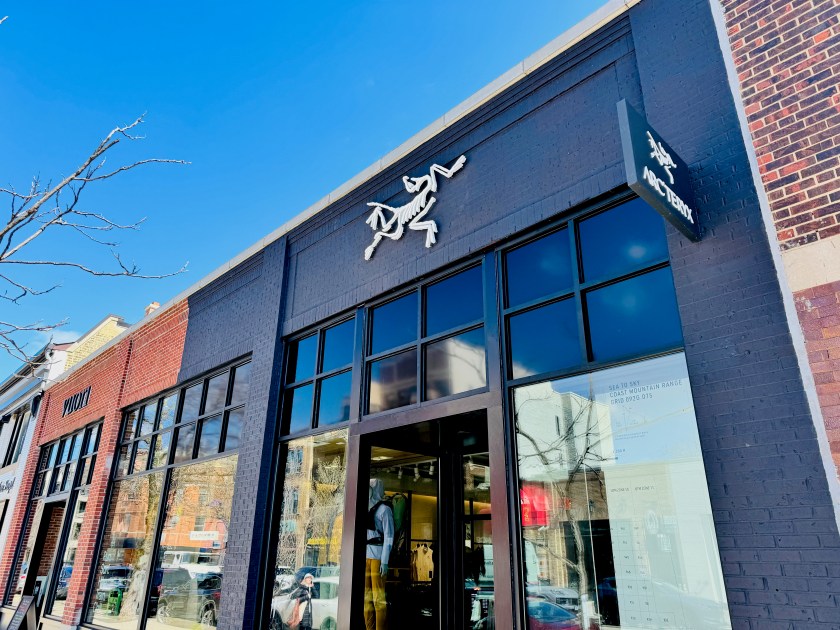
Brands including Vuori, Arc’teryx and Buck Mason reflect a newer phase of the corridor’s evolution, emphasizing activewear, premium casual apparel and lifestyle retail. A change of tenants does not necessarily mean the district is weakening; some national retailers leave because of companywide strategy rather than local demand.
Local versus national retail: the changing mix
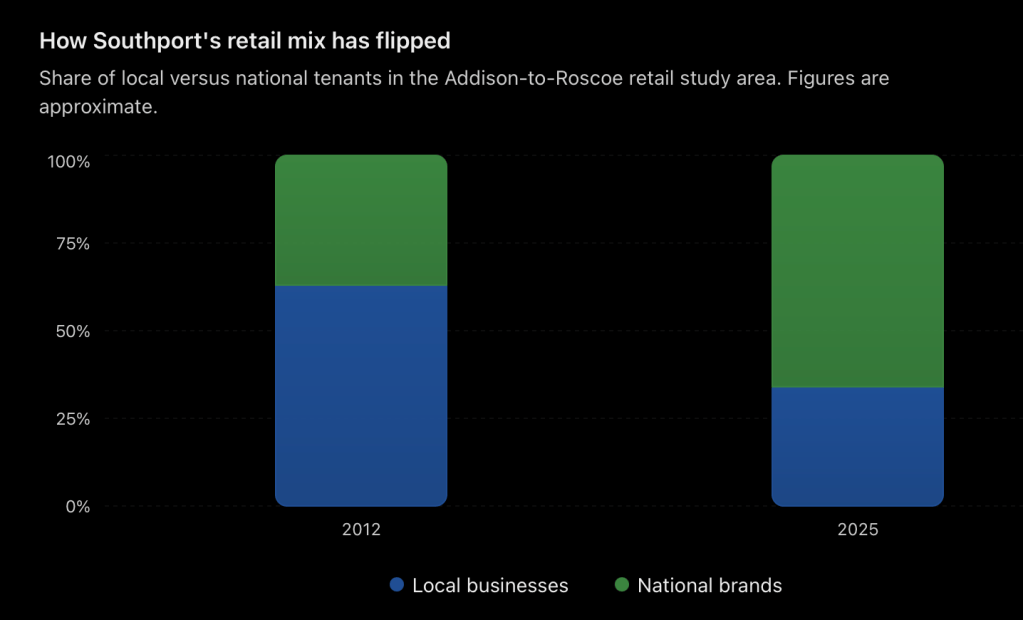
Commercial retail surveys have described a shift from a majority-local tenant mix in 2012 to a majority-national mix by 2025 in the prime Addison-to-Roscoe study area. Approximate figures from the earlier analysis are shown below; these should not be interpreted as a census of the entire avenue.
| Year | Local businesses | National brands |
|---|---|---|
| 2012 | Approximately 63% | Approximately 37% |
| 2025 | Approximately 34% | Approximately 66% |
The shift helps explain why some longtime residents see a very different Southport than they remember.
The independent businesses that built the neighborhood
Krista K Boutique opened in May 2002 and describes itself as the first upscale women’s clothing boutique in what became Southport’s thriving shopping area. Its continued operation shows that independent luxury and contemporary fashion can remain part of the avenue’s identity.
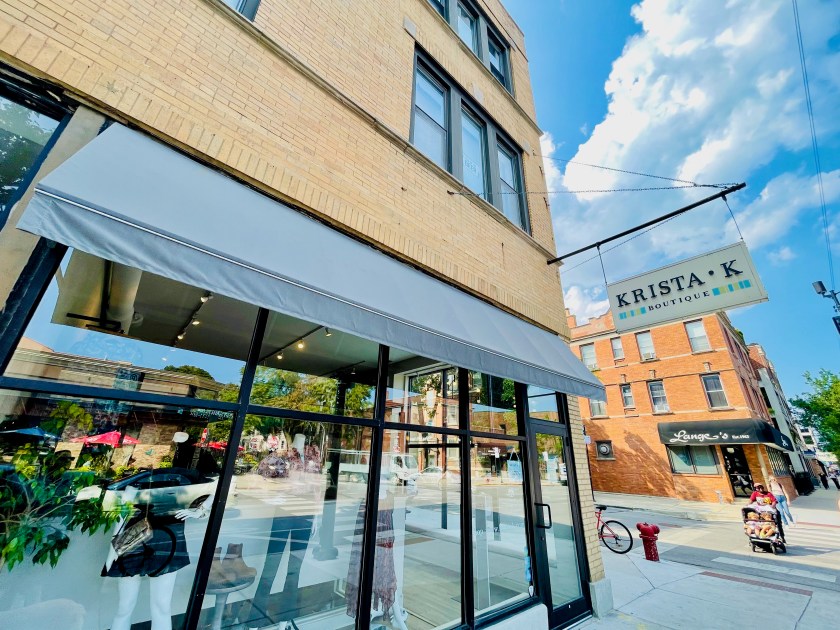
A 2012 Time Out Chicago feature on independent Southport shops celebrated businesses including Krista K and Cerato Boutique. Their appeal lay in merchandise, designers and personal service that shoppers would not necessarily find at national chains.
Other historical names associated with the avenue include She One Boutique, Ceradas and Very Best Cleaners. In 2012, three storefronts at 3400 N. Southport were slated to be combined for a larger Starbucks, displacing smaller businesses. DNAinfo’s reporting illustrates that storefront consolidation, not simply a lack of customers, can change the retail landscape.
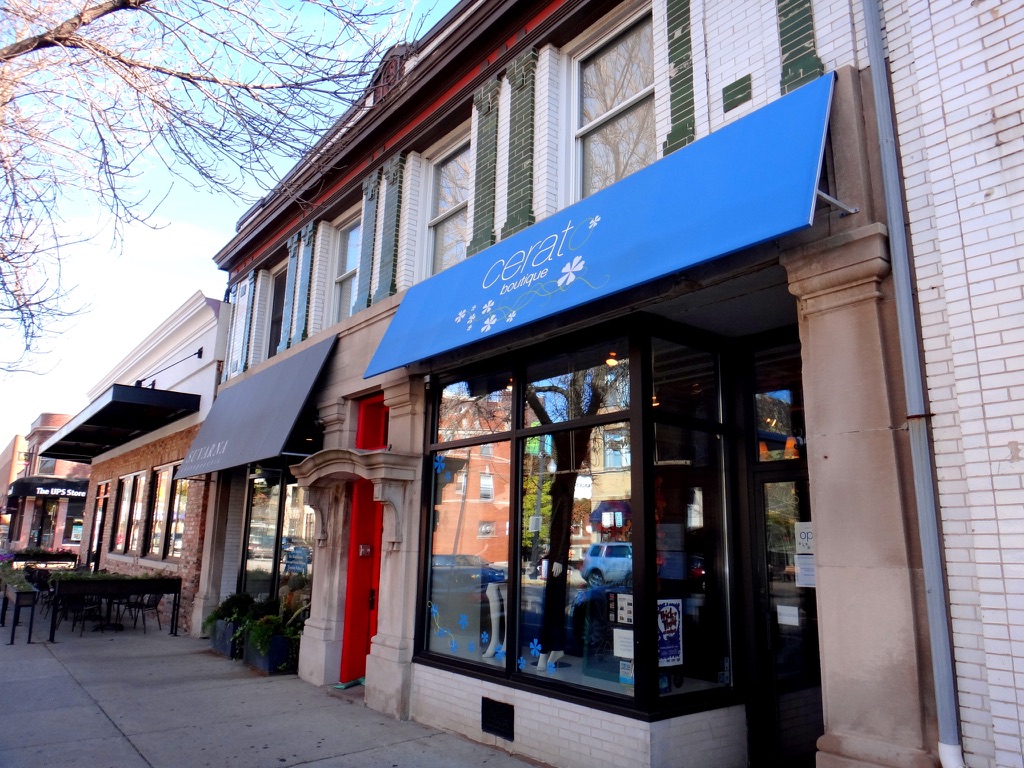
Who are Southport’s independent businesses today?
Southport is still home to locally founded boutiques, restaurants, cafes, specialty stores and cultural institutions. The following examples are not a complete verified storefront census, and locally founded businesses with multiple locations should not be confused with single-location operators.
Some of Southport’s Independent and locally rooted shops
- Krista K Boutique 3458 N. Southport; independent women’s fashion boutique established in 2002.
- Alice & Wonder 3542 N. Southport; Chicago-born clothing, gifts and accessories retailer.
- Mini Wonder 3527 N. Southport; children’s boutique.
- Candyality 3737 N. Southport; Chicago specialty candy retailer.
- Dogaholics longtime neighborhood pet-oriented business; verify its current operating address before publication.
- Primrose neighborhood boutique; current ownership and exact operating details should be checked.
- Galleria Liqueurs 3409 N. Southport; neighborhood specialty retail.

Restaurants, cafe’s and neighborhood institutions
Independent identity extends well beyond clothing stores. The Southport area includes Southport Grocery and Cafe, Cafe Tola, Corridor Brewery & Provisions, Coalfire, Bombastic Cafe, Bodega Sur, Port & Park Bistro, Coda di Volpe, The Butcher’s Tap and 5411 Empanadas, alongside locally operated restaurant-group concepts such as Itoko, Crosby’s Kitchen, Tuco & Blondie and Little Goat Diner. Ownership structures differ, and some restaurants belong to larger Chicago groups rather than single-location independent operators.
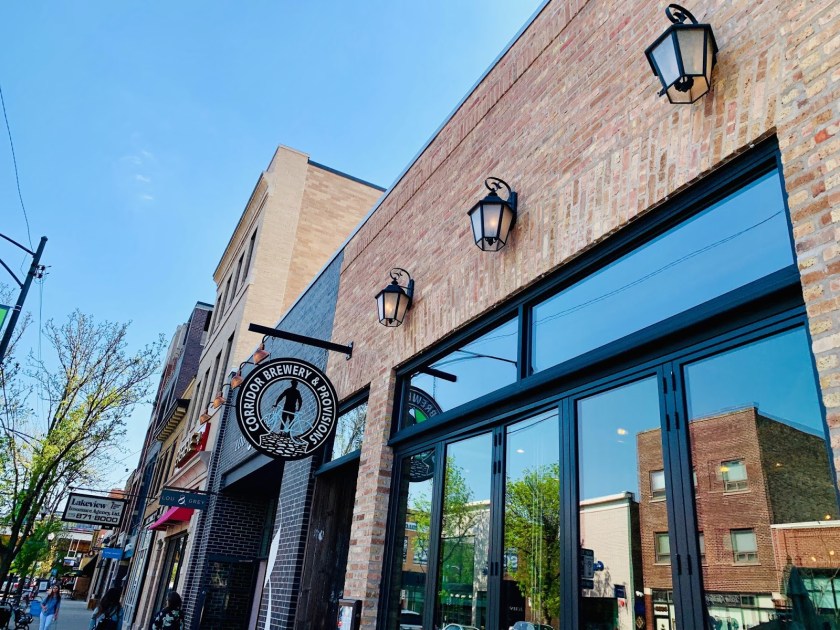
The avenue also has national food businesses, including Jeni’s Splendid Ice Creams. A locally founded concept is not automatically an independently owned neighborhood shop; those categories deserve to be distinguished.
The Music Box: an irreplaceable independent anchor

The Music Box Theatre opened in 1929 and remains independently owned and operated. Its programming attracts visitors for an experience that cannot be replicated by adding another apparel storefront. That visitor traffic supports surrounding dining, shopping and services.
Why Southport, Armitage and Damen attracted national brands
Southport in Lakeview, Armitage in Lincoln Park and Damen in Wicker Park/Bucktown all combine walkable retail blocks, transit access, dense residential populations and established neighborhood identities. Those qualities make them attractive to retailers seeking customers who already live nearby and shoppers willing to visit from elsewhere in Chicago.
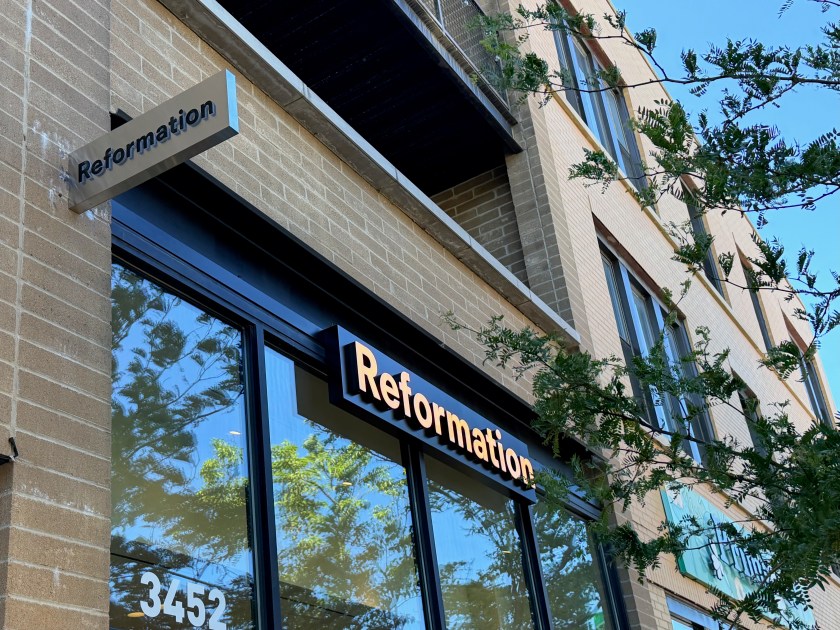
Southport: lifestyle shopping with a neighborhood setting
Southport’s national retail cluster has become a recognizable destination for fashion, activewear, accessories and beauty, while its restaurants and cultural institutions help create activity beyond conventional shopping hours.
Armitage: boutique-scale spaces and design retail
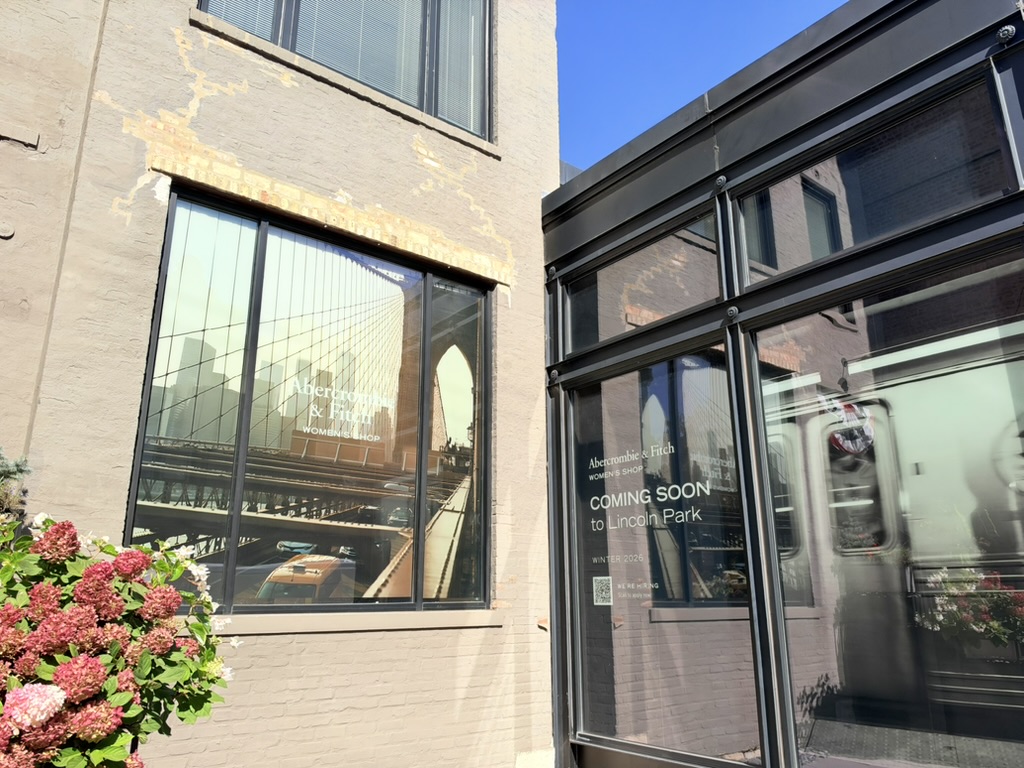
Armitage combines historic architecture and relatively intimate storefronts with upscale brands, showrooms and specialty concepts. A national company can occupy a small, boutique-like space, changing ownership patterns without necessarily changing the street’s appearance.
Damen: independent heritage and greater tension
Damen’s creative and independent reputation preceded much of its national retail expansion. That history can make chain-store growth feel more like a loss of established identity. The three streets therefore illustrate different paths to commercial success.
What happens when national brands move in?
The potential benefits
Recognizable brands can draw shoppers who also visit independent businesses. More foot traffic may support cafe’s, restaurants, specialty shops and nearby services. Retail investment can encourage building improvements and make a district attractive to new entrepreneurs.
The potential costs
Higher demand can increase rent and reduce the number of affordable small storefronts. Landlords may combine units for larger tenants. Too many similar brands can narrow the shopping mix. And national companies sometimes close stores for corporate reasons unrelated to a location’s performance.
A neighborhood can have low retail vacancy and still become less accessible to a new independent retailer. Economic strength and small-business affordability are not the same measure.
Why the blocks north of Addison matter
The prime Addison-to-Roscoe shopping stretch is not all of Southport Avenue. North of Addison, restaurants, services, specialty stores and community institutions provide a different kind of neighborhood activity. Connecting these blocks through events, wayfinding and pedestrian-friendly design can help independent operators benefit from the wider corridor’s appeal.

Southport in 2030 and beyond
National brands will likely continue competing for prime locations, particularly in premium apparel, beauty, wellness and lifestyle retail. Independent operators may find opportunities in distinctive merchandise, specialty food, dining, services and experiences that cannot easily be purchased online.
The most successful future for Southport is not necessarily the one with the most national logos. It is the one that offers a compelling mix of recognizable retailers, local entrepreneurship, neighborhood institutions and places that stay active into the evening.
Are small businesses becoming a thing of the past?
No. But the period when independent businesses dominated Southport’s prime retail blocks appears to have ended.
Krista K, Alice & Wonder, Mini Wonder, Candyality, the Music Box Theatre and many locally operated restaurants show that independent identity remains part of Southport. What has changed is the competitive environment in which these businesses operate.
National retailers help bring shoppers to the avenue. Independent businesses help give those shoppers something they cannot find everywhere else. The challenge for the next 20 years is to make sure Southport can continue offering both.
Sources and further reading
- Krista K About Us
- Alice & Wonder Visit the Shops
- Candyality Southport Location
- Music Box Theatre
- DNAinfo – Can Southport Stay Charming? (2016)
- DNAinfo – Starbucks Takes Over Three Storefronts (2012)
- Time Out Chicago – Five Independent Shops on Southport
- Stone Real Estate Retail Survey 2024
- The Lowe Group Southport Storefront Turnover (2026)
- Japanese Culture Center 2026 Southport Business Participants
Editorial note: Business and ownership details can change. The local/national tenant figures describe the Addison-to-Roscoe survey area and should not be applied to the entire avenue. Images are linked from Wikimedia Commons; review their attribution and licensing terms before publishing.


