
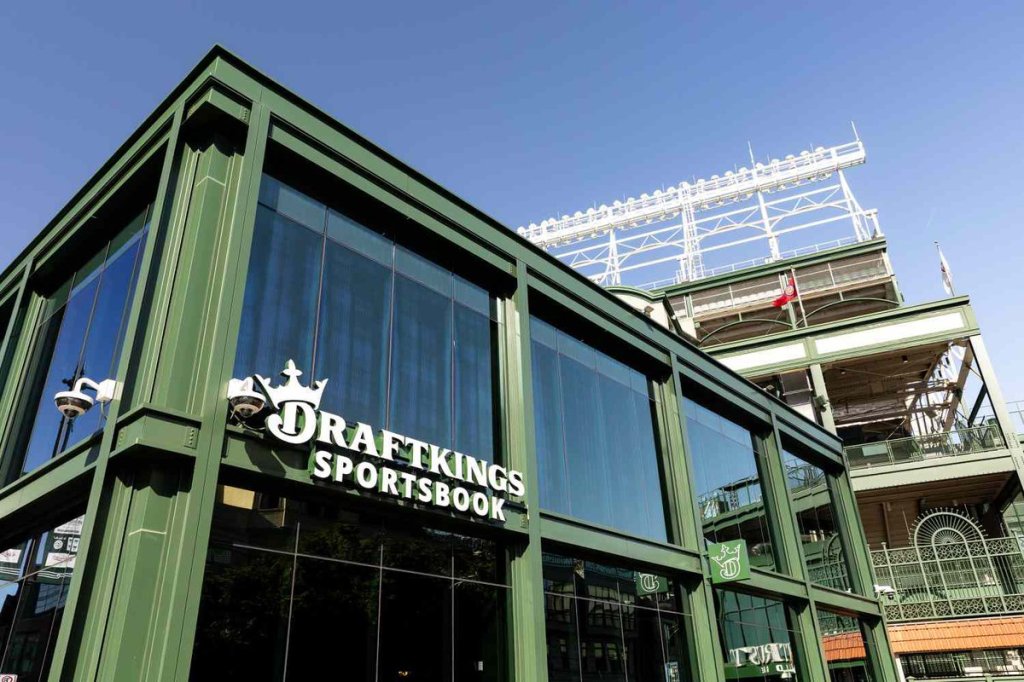
DraftKings is shutting down its in-person sportsbook next to Wrigley Field, and the company is making it clear that Illinois’ increasingly aggressive tax structure is a major reason why.
The sportsbook will officially stop taking bets at the end of May, barely two years after opening with major fanfare as one of the most ambitious sports betting destinations in the country. While DraftKings will continue operating in Illinois through its mobile app, the physical sportsbook concept at Wrigley is no longer financially worth it.
The closure is being viewed as one of the clearest signs yet that Illinois has made the sports betting business significantly harder — and far less profitable — for operators.
When the venue opened in 2024, it was pitched as a marquee attraction: a three-story sportsbook and entertainment space directly connected to the energy of Wrigleyville and Cubs fandom. It was one of the first stadium-adjacent sportsbooks of its kind in Illinois and symbolized how quickly legalized sports gambling was expanding.
But since then, Illinois lawmakers have continued piling on taxes and fees aimed at sportsbooks. Combined with additional city-level costs in Chicago, companies like DraftKings now face one of the most burdensome operating environments in the country.
Retail sportsbooks already operate on thinner margins than mobile betting apps because they require expensive real estate, staffing, security, food service, and day-to-day operations. Add rising taxes on top of that, and the math simply stopped working.
The Wrigley location itself is not disappearing entirely. DraftKings and the Cubs plan to keep the venue open as a sports bar and entertainment space, just without the actual sportsbook operation.
The partnership between the Cubs and DraftKings will also continue, with DraftKings remaining the team’s official sports betting and fantasy sports partner.
Still, the shutdown sends a pretty strong message: Illinois may have embraced legalized sports betting, but its tax policies are now pushing some of the industry’s biggest players away from large-scale in-person investments.


Hmm , this is probably a case where public policy and what is good for the public are in alignment.
LikeLike